
Seed Starting Mix Recipe
Why does seed-starting soil matter? We share what to look for in a great mix, why we created our own at Whitewater Creek Farm, and how it supports strong, healthy seedlings from day one. A behind-the-scenes look inside our greenhouse as seed season kicks off 🌱
Alicia Leverette
2/2/20263 min read
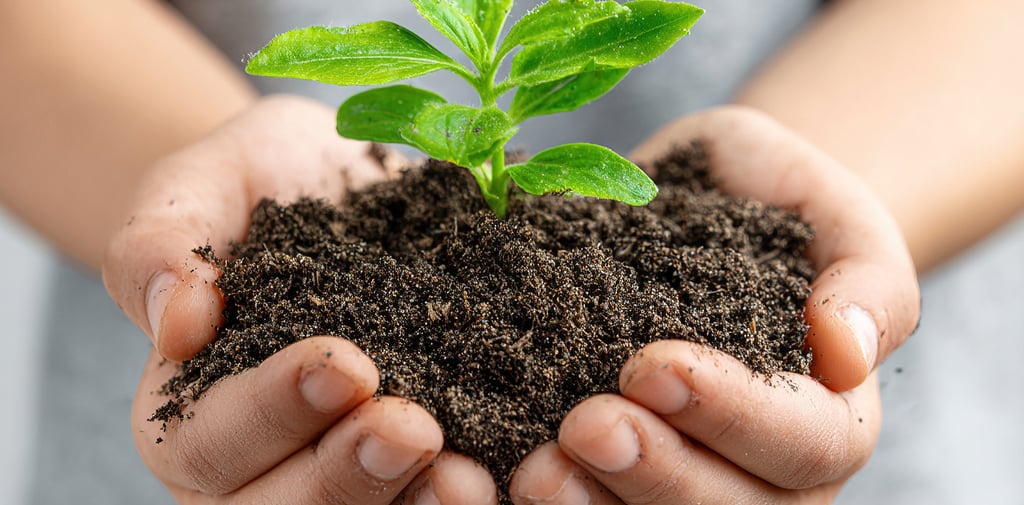

Why a Seed-Starting Mix Matters (and Why We Make Our Own at Whitewater Creek Farm)
Every spring, gardeners get excited about seeds — flipping through catalogs, dreaming of tomatoes, peppers, flowers, and full summer harvests.
But one of the most overlooked parts of seed starting isn’t the seed at all.
It’s the soil.
At Whitewater Creek Farm, we’ve learned through years of trial, error, and observation that what a seed sprouts into depends greatly on what it sprouts in. That’s why we don’t rely on ordinary garden soil or generic potting mixes for starting seeds. Instead, we use — and make — a carefully formulated seed-starting blend designed specifically for young plants.
Let’s talk about why that matters.
Why Not Just Use Garden Soil or Potting Mix?
It’s tempting to scoop soil from the garden or grab a standard potting mix off the shelf. But most of those options aren’t built for tiny seedlings.
Garden soil is often:
Too dense for delicate roots
Prone to compaction
Slow to drain
More likely to harbor disease organisms
Regular potting mixes are made for established plants in containers, not newborn seedlings. They often:
Hold too much water
Contain stronger fertilizers
Lack proper air space
Seeds need something different — a medium that supports them without overwhelming them.
What Makes a Good Seed-Starting Mix?
A quality seed-starting mix should:
Hold moisture evenly without staying soggy
Drain well
Provide oxygen to young roots
Be gentle and low-salt
Support soil life from the very beginning
Why We Chose to Formulate Our Own
Here at Whitewater Creek Farm, our growing philosophy centers on working with nature rather than overpowering it.
We grow in living soil. We avoid synthetic fertilizers and harsh chemicals. We focus on heirloom and native plants, flavor over shipping durability, and long-term soil health over short-term gains.
So when it came to seed starting, it only made sense to build a mix that followed those same principles.
We wanted something that:
Forms firm soil blocks
Stays airy and well-drained
Feeds seedlings gently
Encourages microbial life
Builds strong roots and sturdy stems
What’s in Our Seed-Starting Mix
Our blend starts with a moisture-balanced base of peat moss and screened compost, layered with aeration from vermiculite, perlite, rice hulls, and worm castings.
From there, we mineralize and enrich the mix using carefully chosen natural inputs such as:
basalt rock dust, gypsum, oyster shell flour, kelp meal, crab meal, insect frass, neem cake, mustard seed meal, malted barley, humic acid, aloe, and Craft Blend fertilizer.
Each ingredient is selected with intention — to provide trace minerals, calcium, silica, potassium, gentle phosphorus, biological stimulation, disease resistance, and long-term plant health.
Nothing is added randomly.
The goal is balance.
Why This Mix Is Different
Many commercial seed-starting mixes are essentially sterile mediums meant to hold moisture and little else.
Our mix is built to function as a living foundation — feeding both the plant and the soil biology from the first root hair.
We aren’t chasing fast growth through synthetic inputs. We’re building plants slowly, intentionally, and resiliently — the kind of seedlings that transplant easily and thrive in the garden.
A Final Word
The mix we use at Whitewater Creek Farm is a premium seed-starting blend. You can absolutely make a simple, effective seed-starting mix without all the extras we’ve chosen to include.
We added them because they align with how we farm — focusing on soil health, plant resilience, and long-term nutrition.
If you’re gearing up to sow seeds and would like to try the same mix we use in our greenhouse, we keep it available upon request for pickup at The Willie Mae farm stand. $12 per gallon
Whether you make your own or use ours, the most important thing is getting seeds in the soil and growing something good.
Our Whitewater Creek Farm Seed-Starting Mix Recipe
Batch Size
• 1 full 3-cu-ft bale peat moss
• Finished volume ≈ 59 gallons
Base Ingredients
Peat moss — 22.4 gal
Screened compost — 11.2 gal
Vermiculite — 11.2 gal
Perlite — 6 gal
Rice hulls — 5 gal
Worm castings — 2.8 gal
Minerals & Biological Amendments
Basalt rock dust — 4½ cups
Gypsum — 4 cups
Oyster shell flour — 4½ cups
Kelp meal — 4½ cups
Insect frass — 3¾ cups
Malted barley (finely ground) — 2 cups
Humic acid powder — 1¼ cups
Crab meal — 3 cups
Neem cake — 1 cup
Mustard seed meal — 2 cups
Craft Blend fertilizer — 1¼ cups
Aloe Vera
Dry in mix:
• ½ cup aloe flakes (200×)
In hydration water:
• ¼ tsp aloe 200× per gallon
• Expect 10–14 gallons to hydrate full batch
Mixing Instructions
1️⃣ Pre-hydrate peat moss with aloe water until evenly damp.
2️⃣ Combine all dry amendments in a separate container.
3️⃣ Blend amendments evenly into base materials.
4️⃣ Add water gradually until the texture resembles brownie batter.
5️⃣ Let sit 20–30 minutes, then remix.
6️⃣ Use for soil blocks, seed snails or trays.
WHITEWATER CREEK FARM
Troy, Alabama
Home · Our Story · The Willie Mae · Contact
© 2026 Whitewater Creek Farm